Memorisation
9 min readHow to memorise the Qur’an with steady practice
Learn how to memorise the Qur’an with a manageable passage, accurate recitation and recall practice. Make room for recent and older revision from the start.
In this guide
You might hope to stand in salah and recite a surah you once needed to follow on the page. Perhaps you want to begin hifz for the first time, or return to the Qur’an you learned when you were younger.
Then you sit down with your mushaf, the written copy of the Qur’an, and the questions become more immediate. Where should you start? How much should you learn? What should you do when a passage feels familiar while you’re looking at it, but disappears when you look away?
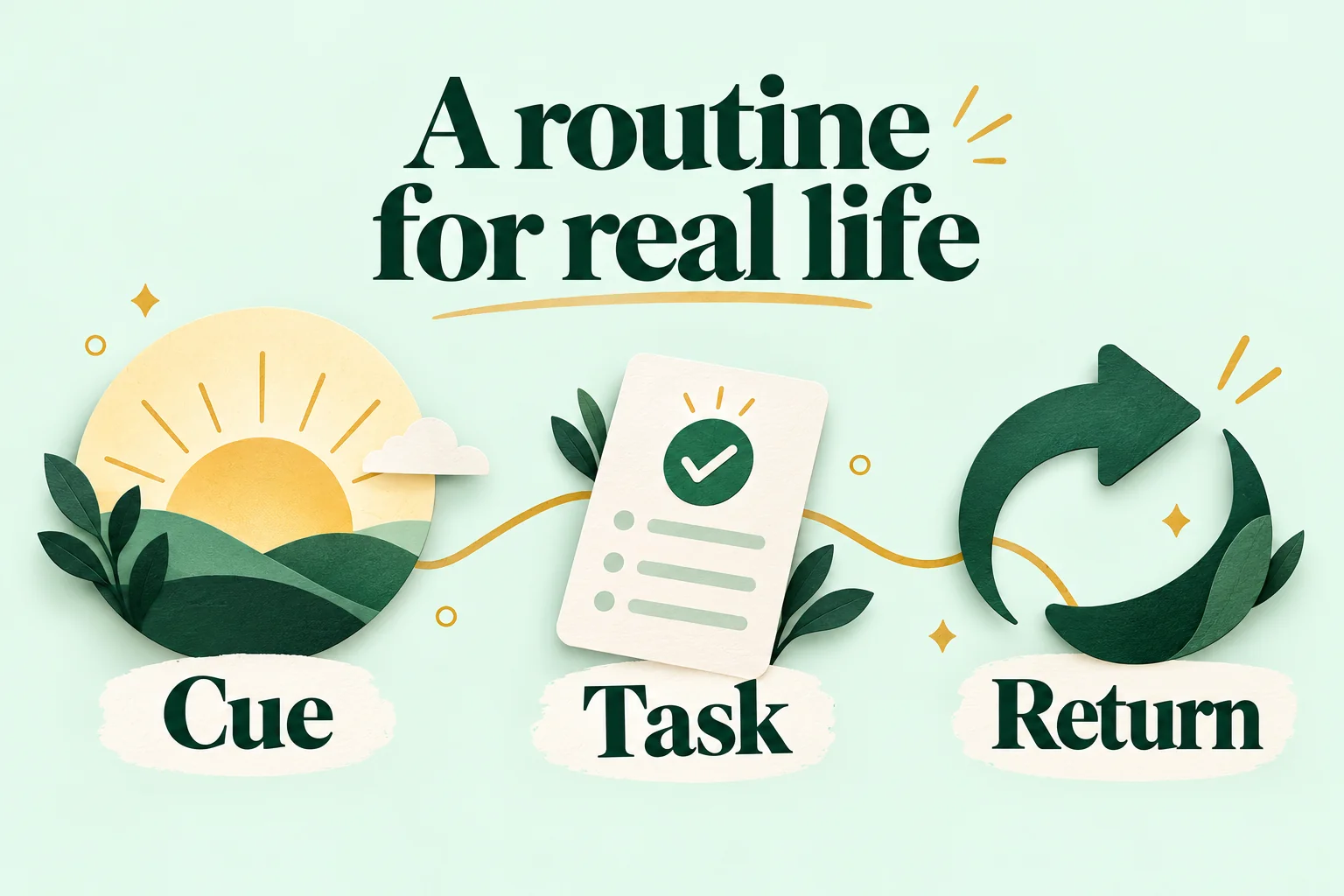
Begin with a passage you can read accurately. Learn a small part, try it from memory, check what needs correcting, and return to it later. Let a knowledgeable teacher hear your recitation, and make space for revision from the beginning.
Your first assignment may be only a few lines. That gives you something specific to practise and bring back to your teacher.
Begin with a sincere intention and a manageable first step
Hifz means memorising the Qur’an. Before setting a daily target, remember why you want to learn Allah’s words. You may hope to recite more in prayer, understand familiar surahs more deeply, or help your family build a lasting relationship with the Qur’an.
The Prophet ﷺ taught:
إِنَّمَا الأَعْمَالُ بِالنِّيَّاتِ
Meaning: “Actions are judged by intentions.”
Sahih al-Bukhari 1, excerpt. English rendering of the meaning.
The narration goes on to explain intention through the example of migration. For someone beginning hifz, it is a reminder to keep the purpose of learning close while organising the practical work. A page target can help you plan, but another person’s pace cannot tell you how much you should learn today.
Ask Allah for help, then choose an amount you can give proper attention to. You can adjust it as your teacher gets to know your reading and your week.
Let a teacher hear you before you repeat the passage
It is easy to repeat a word many times without noticing that you are saying it incorrectly. Have your chosen passage checked before you build your memorisation around it.
Read aloud to your teacher. They can listen to pronunciation, tajweed, the rules of Qur’an recitation, and where you stop and begin again. If a sound or stopping point is uncertain, ask them to demonstrate it and listen to your next attempt.
Tell them what you already know. Perhaps you learned short surahs at home, followed recordings, or studied years ago. Explain how much time you usually have for practice, including any earlier memorisation that needs revision.
If you are still learning letters or joined words, ask how reading practice and memorisation should fit together. The next assignment should reflect what you can currently read. Our guide to choosing a Qur’an teacher explains what to look for in that support.
Choose a passage you can practise carefully
Agree the beginning and end of the passage with your teacher. One short ayah, or verse, may be a suitable starting point; a longer ayah may need to be learned in smaller parts. Ask about suitable stopping points rather than dividing the text wherever a line ends.
Leave time for the whole practice session: listening, reading aloud, trying from memory, checking and revising. If learning something new uses all your available time, there will be little room to care for what you already know.
Use a familiar mushaf so you can find the assigned passage easily. Read a reliable translation to help you understand what you are learning, and take questions about the meaning to your teacher. A translation supports your understanding; you will still need to practise the Arabic recitation itself.
Allah says:
وَلَقَدْ يَسَّرْنَا الْقُرْآنَ لِلذِّكْرِ فَهَلْ مِنْ مُدَّكِرٍ
“And We have certainly made the Quran easy to remember. So is there anyone who will be mindful?”
Qur’an 54:17. Translation: Dr. Mustafa Khattab, The Clear Quran.
This verse invites us to turn towards the Qur’an and take heed. It gives us hope as we learn. It does not set a completion date or mean that every passage will come without effort. You can approach a difficult ayah with trust in Allah and still ask for a smaller assignment or another explanation.
Read, try from memory, then check what happened
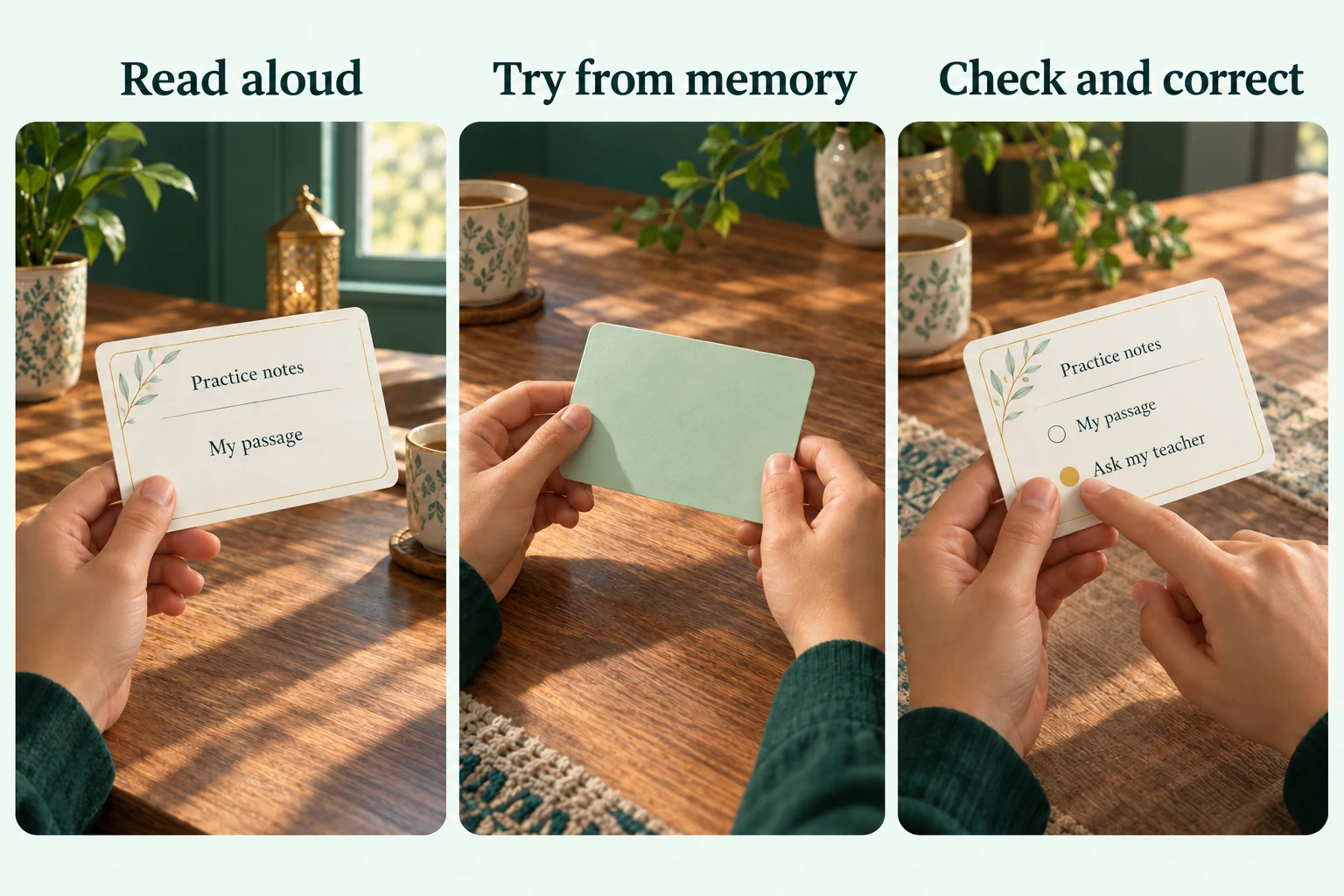
Sit down with the passage your teacher has assigned. Listen to a recitation they recommend while following the text, then read aloud yourself. Give the sounds enough attention that you can notice where your attempt differs from the model.
Work on a small part first. When you can read it accurately, look away and try to recite it from memory. You may discover that you know the opening but need help with the next word. Look back, check that word in its phrase, then try the part again.
If you make a mistake, return to the correct wording before repeating it. Practise the corrected part and put it back into the surrounding passage. Where you are unsure about pronunciation, ask your teacher rather than trying to settle it by guesswork.
There is no repetition count that tells every learner when a passage is ready. Repetition gives you practice; attempting it without looking helps you notice what you can recall. Pay attention to whether you need prompts, mix up words or hesitate in the same place.
Quick tip
If you keep checking the same word, make a short note of the ayah and the difficulty. Bring that exact place to your next lesson.
For other ways to organise this practice, see our Qur’an memorisation techniques guide.
Practise the join between two parts
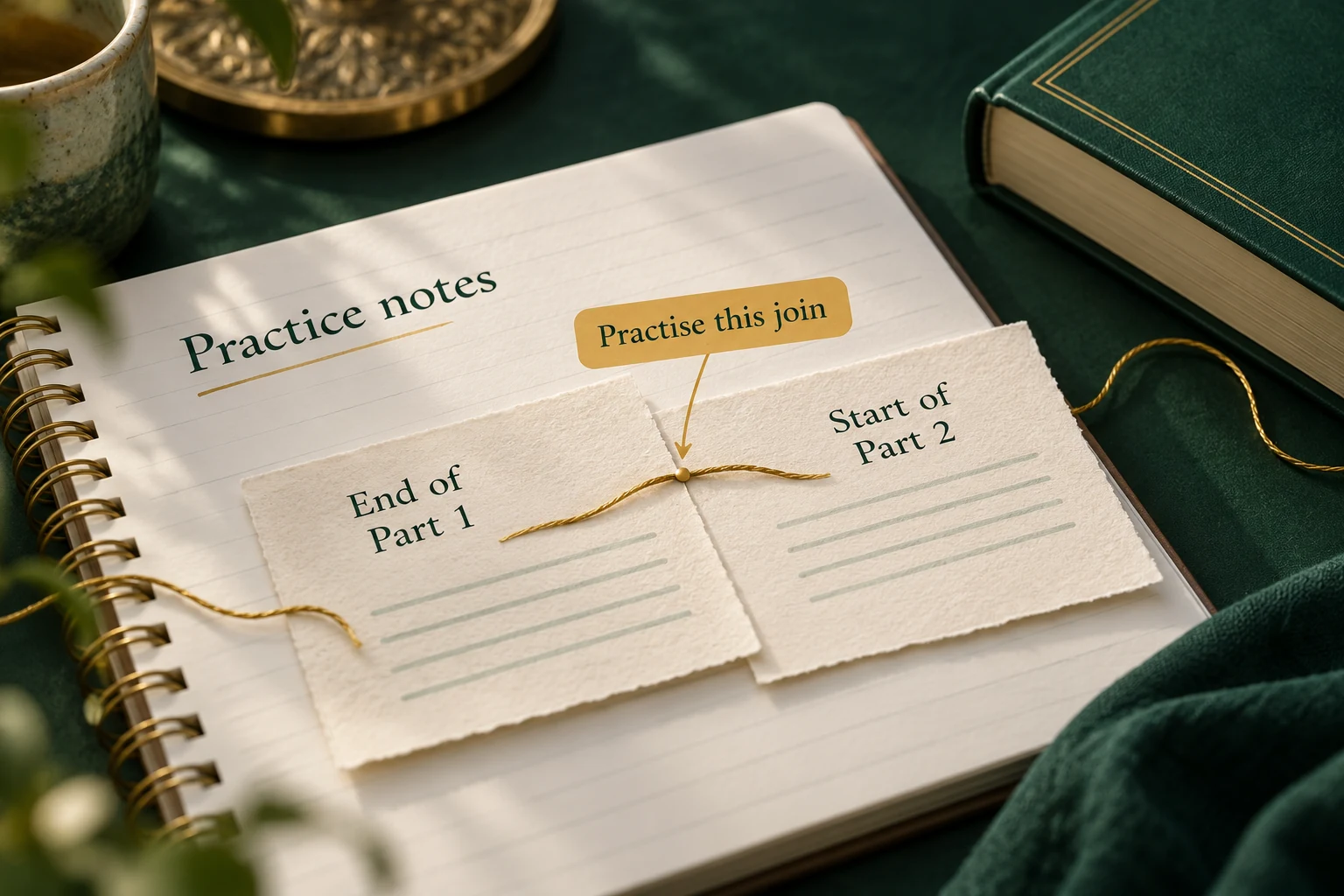
You may be able to recite two parts separately, then lose your place when you put them together. Give that transition its own practice.
Go back to the end of the first part and recite it with the beginning of the next. Once the join is clearer, try the longer passage again. This lets you work on the place that needs help without always spending most of the session on an opening you already know.
Give the ending attention too. If you repeatedly restart from the beginning, the last part can receive fewer attempts. Practise it separately, then check it in the complete passage.
Your teacher can help distinguish a forgotten transition from an uncertain word or two similar passages becoming mixed up. Tell them where you get stuck, rather than only saying that the whole lesson is difficult.
Return later and see what you can still recite
A passage may feel secure immediately after practice. Come back after a break, and again at your next practice session, to find out what you can recall without looking.
Try the assigned passage before reading it through. Then open your mushaf and check. If one join needs help, work on that join. If much of the passage needs prompting, tell your teacher before increasing the amount.
Needing another attempt gives you information about the next practice session. It does not tell us how sincere you are or what Allah thinks of your effort.
When your teacher listens, mention where you needed help at home. A passage you recited with several prompts needs different attention from one you could begin and complete independently.
Keep new lessons, recent revision and older revision in your week
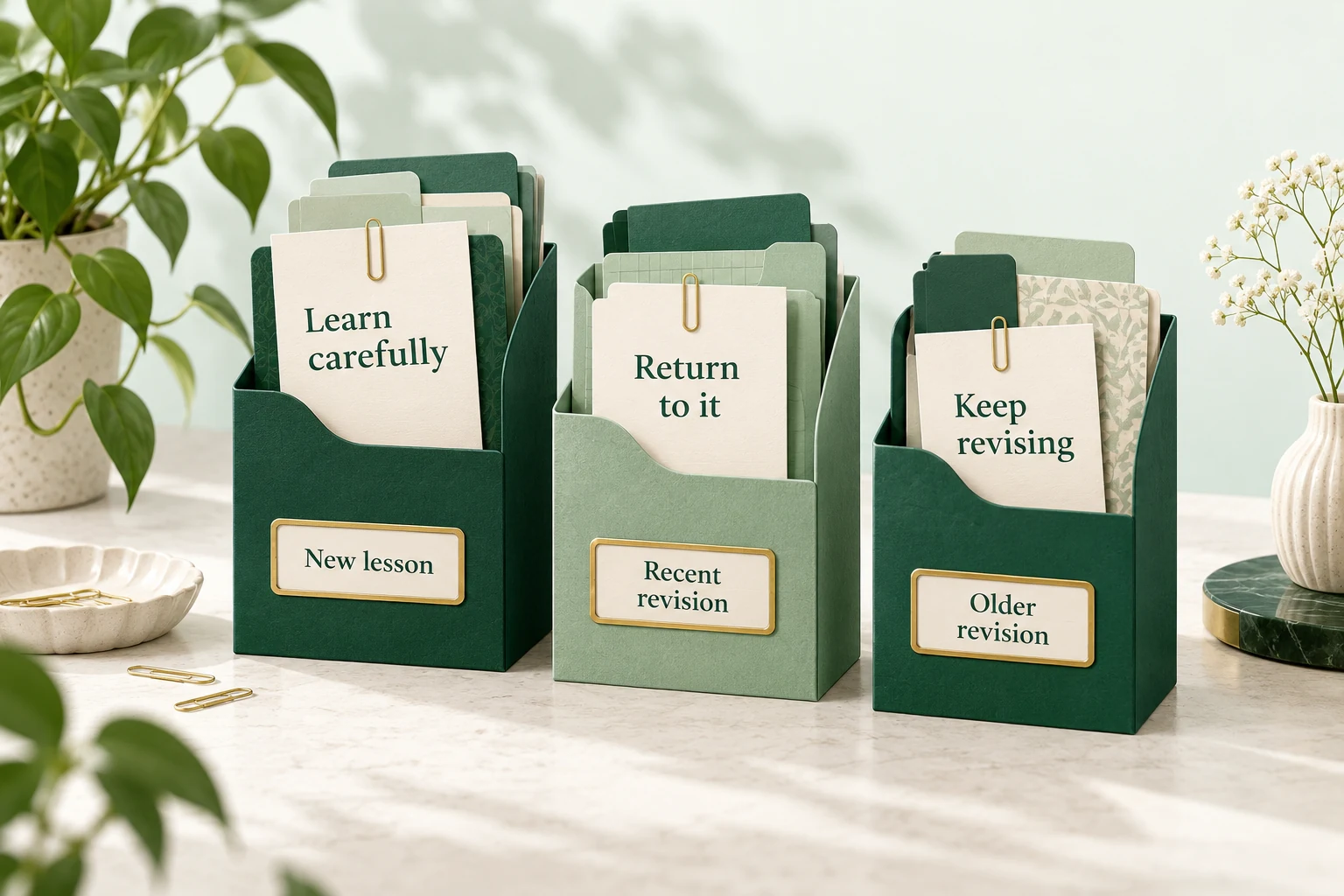
Muraja’ah means revision. As your memorisation grows, your routine needs room for passages at different stages.
| Part of your practice | What it includes | What to notice |
|---|---|---|
| New lesson | The passage you are currently learning | Can you read it accurately and attempt it from memory? |
| Recent revision | Passages you learned recently | Can you still recite them after time away from the page? |
| Older revision | Earlier surahs and passages | Where do you need prompts or confuse similar wording? |
Ask your teacher how much belongs in each part. These groups describe the work; they do not prescribe equal time or the same daily amount for everyone. If you are starting with your first passage, you will build the revision groups as you learn.
As there is more to revise, your new lesson may need to become smaller. If older passages are weakening, discuss giving them more attention before adding to the load. Keep a brief note of recurring difficulties so your teacher can help you decide what comes next.
Our Qur’an revision schedule guide explores how to organise that return to recent and older work.
Make a routine that fits an ordinary day
Choose a time you can usually return to with enough attention to practise. An early session may suit one person; another may need to work around school, shifts or family responsibilities.
Before you begin, know which passage you are learning and which passages you are revising. Put the mushaf, assigned audio and any teacher notes within reach. A clear task makes it easier to begin when the available time is short.
On a busy day, ask how to reduce the assignment while keeping contact with earlier work. If you miss several sessions, tell your teacher and check what you can still recite before trying to catch up. Adding several new lessons at once may leave the earlier difficulties untouched.
If you are helping a child, keep the task clear and the correction gentle. Give them time to attempt the passage. Follow the teacher’s guidance about prompts, and note uncertainties you cannot confidently correct yourself. Our daily Qur’an routine guide offers more help with fitting practice into the week.
Ask for help when the same difficulty keeps returning
You do not need to wait until an entire lesson feels unmanageable. Ask your teacher when a sound remains uncertain, a join repeatedly disappears, or similar ayat keep becoming mixed up.
You might say, “I can recite these two ayat separately, but I need a prompt between them.” Or, “I could recite yesterday’s lesson last night, but this morning I needed to look several times.” Those details give the teacher something specific to listen for.
If you want guided learning, see how The Hifz Academy organises lessons and home practice. Begin by understanding the approach and discussing a suitable starting point.
For your next practice session, return to one manageable passage. Check the reading, try it from memory, and note what you would like your teacher to hear. May Allah make your learning sincere and help you keep returning to His words.